

Washington has announced an $11.1 billion arms package for Taiwan, among the largest-ever military sales to the island, reinforcing deterrence across the Taiwan Strait while unsurprisingly drawing condemnation from Beijing.
The United States has unveiled an $11.1 billion arms package for Taiwan that, if completed, would rank among the largest military sales Washington has ever approved for the self-governing island. The announcement underscores a steady acceleration in US–Taiwan defence cooperation amid rising military pressure from China and an increasingly volatile regional security environment.
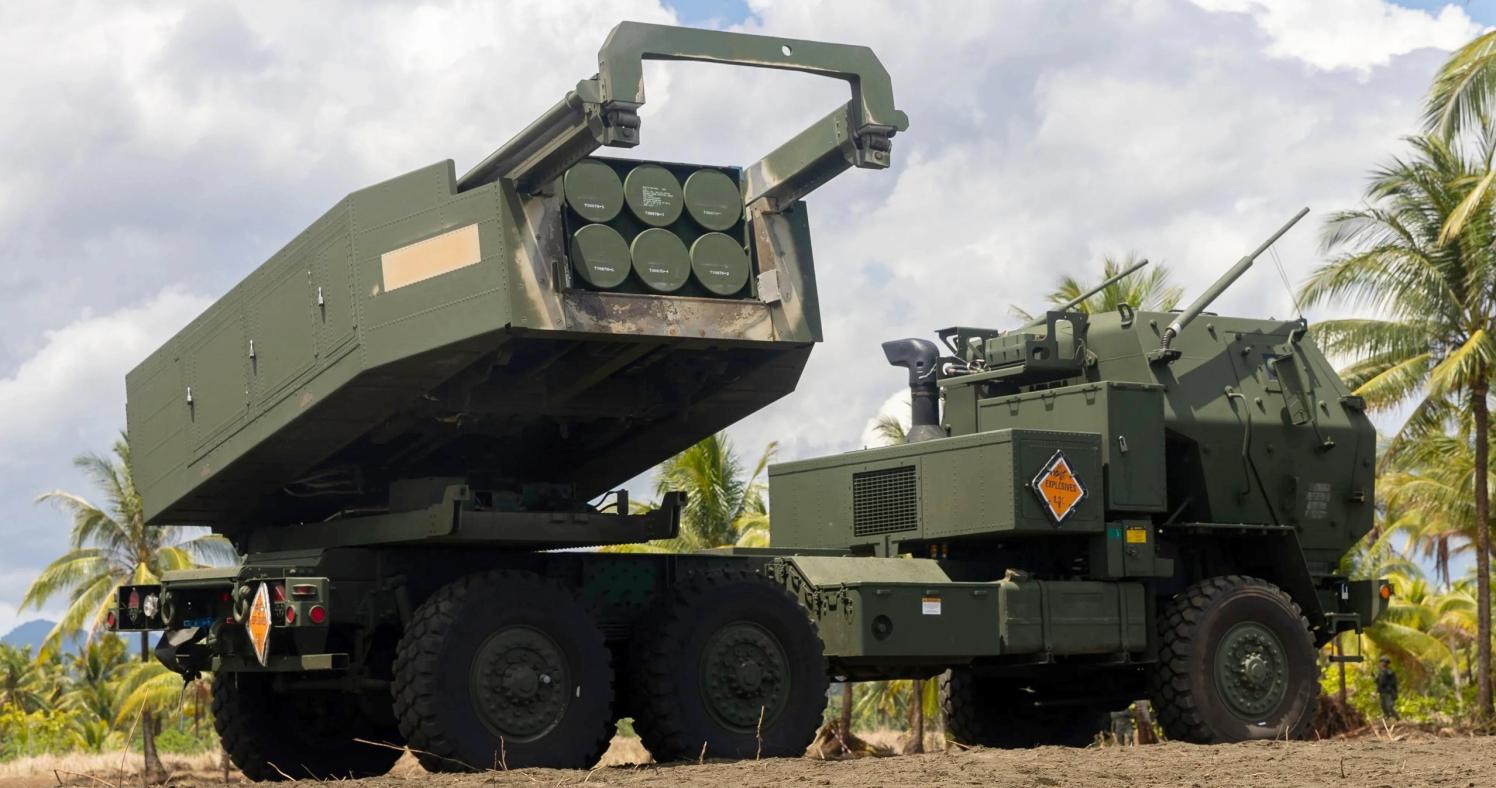
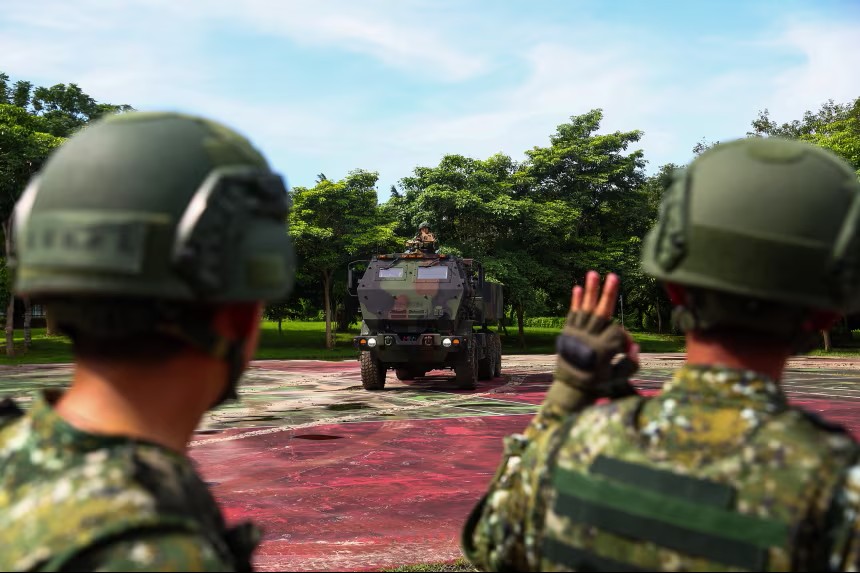
The package comprises eight separate defence purchases, including High Mobility Artillery Rocket Systems (HIMARS), anti-tank and anti-armor missiles, loitering suicide drones, howitzers, military software, and spare parts for existing systems. Details were released simultaneously by US and Taiwanese authorities, with the sales processed through the US Defense Security Cooperation Agency, which manages Foreign Military Sales.
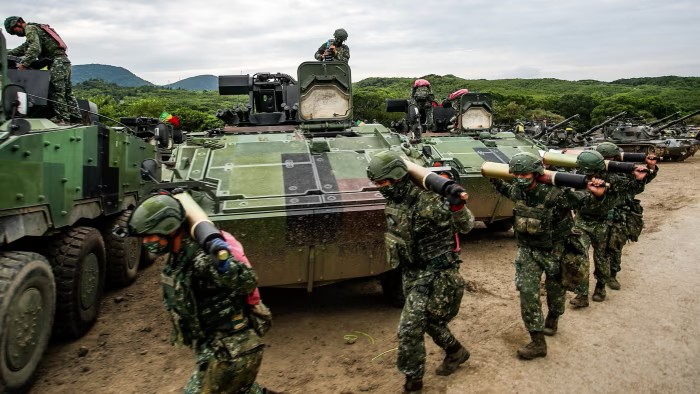
China responded swiftly, reiterating its long-standing opposition to any form of military support for Taiwan. Beijing claims the democratic island as part of its sovereign territory despite never having governed it, and views US arms sales as interference in its internal affairs.
“The US’s attempt to use force to support Taiwan independence will only backfire,” Chinese Foreign Ministry spokesperson Guo Jiakun said at a regular press briefing. “Its attempt to contain China by using Taiwan will absolutely not succeed.”
For Taiwan, the deal represents another step in a broader effort to strengthen deterrence capabilities as Chinese military activity around the island intensifies. Chinese fighter jets, warships, and drones now operate near Taiwan almost daily, while large-scale military exercises regularly simulate blockade and invasion scenarios.
Taiwan’s Ministry of National Defense framed the arms package as essential to maintaining stability in the region. In a statement, the ministry said the United States “continues to assist Taiwan in maintaining sufficient self-defense capabilities and in rapidly building strong deterrence and leveraging asymmetric warfare advantages,” describing these efforts as a foundation for peace and stability across the Taiwan Strait.
Washington’s position is anchored in the Taiwan Relations Act, which obliges the United States to provide Taiwan with defensive arms while maintaining “strategic ambiguity” over whether it would intervene directly in a conflict. Although the US does not have formal diplomatic ties with Taipei, it remains Taiwan’s most important security partner.
DETERRENCE AS A STRATEGY
A US official said that since 2010, the executive branch has notified Congress of approximately $49 billion in arms sales to Taiwan. The latest package would add substantially to that total, reflecting both Taiwan’s evolving defence priorities and Washington’s growing concern about the balance of power in East Asia.
The proposed sales still require approval from the US Congress, but Taiwan traditionally enjoys strong bipartisan support on Capitol Hill in Washington. Lawmakers from both major parties have increasingly portrayed Taiwan as a critical partner in preserving a rules-based international order and countering coercive behaviour by China.
Five of the eight items in the new package, including HIMARS systems, missiles, and drones, are expected to be funded under a proposed $40 billion special defence budget introduced by Taiwanese President Lai Ching-te in late November. The budget has yet to clear Taiwan’s legislature, where defence spending often becomes entangled in partisan debate.
The proposed budget focuses on precision artillery, long-range strike capabilities, air and missile defence systems, anti-armor weapons, drones, counter-drone technology, and artificial intelligence-enabled systems. It also includes funding for weapons jointly developed by Taiwan and the United States, reflecting a push toward deeper technological cooperation.
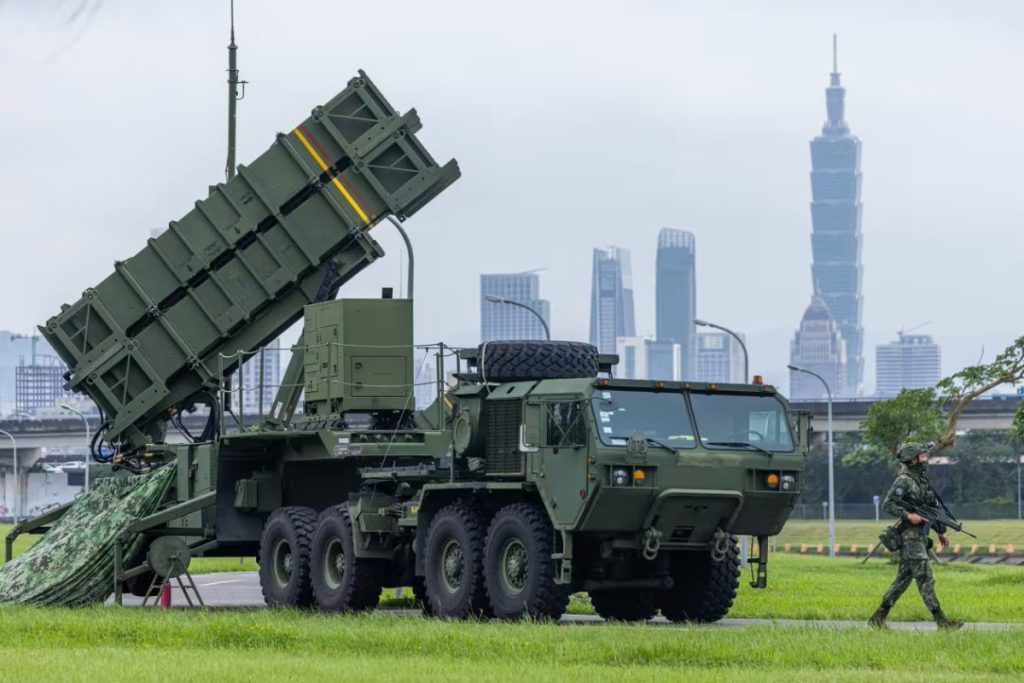
A key element of Taiwan’s evolving defence posture is the so-called “T-Dome” air defence concept, announced by President Lai in October. While details remain limited, the initiative is widely understood to involve an integrated, multi-layered system designed to counter missiles, aircraft, and drones, enhancing Taiwan’s ability to withstand sustained attacks.
Raymond Greene, director of the American Institute in Taiwan, the de facto US embassy on the island, has expressed confidence that Taiwan’s legislature will ultimately approve higher defence spending. He recently said that despite political differences, there is a shared understanding in Taiwan of the security challenges the island faces.
“Every budget issue has to go through the legislative process,” Greene said, “but I remain very confident that at the end of the day, all the parties in Taiwan will come together on behalf of increased defence spending.”
PROPOSED PACKAGE DWARFS THE LATEST ONE
The $11.1 billion package marks the second Taiwan arms deal announced during the second Trump administration. In November, Washington approved a separate $330 million sale covering spare and repair parts for aircraft. Together, the deals signal continuity in US policy toward Taiwan, regardless of changes in administration.
Taiwanese presidential spokesperson Karen Kuo said following the November deal that Taiwan plans to raise defence spending to more than 3% of gross domestic product in the coming year, with a longer-term target of reaching 5% of GDP by 2030. Such levels would represent a significant shift for Taiwan, whose defence spending has historically hovered closer to 2% of GDP.
The emphasis on asymmetric capabilities in the latest package reflects lessons drawn from recent conflicts, including Ukraine, where mobile missile systems, drones, and precision weapons have proven effective against larger conventional forces. For Taiwan, which faces the prospect of confronting a numerically superior adversary, such systems are seen as central to a credible deterrence strategy.
Beijing, however, views these developments through a very different lens. Chinese officials have repeatedly warned that arms sales to Taiwan undermine regional stability and risk emboldening pro-independence forces on the island. Military analysts note that each new sale adds to a cycle of action and reaction, with China often responding through increased military activity or diplomatic pressure.
Despite Beijing’s saber-rattling rhetoric, neither Washington nor Taipei has indicated any intention to alter the existing status quo formally. US officials continue to stress that arms sales are defensive in nature, while Taiwan’s government maintains that it seeks peace but nevertheless must be prepared to defend itself.
The scale of the latest package nevertheless highlights how central Taiwan has become to broader US–China strategic competition. As tensions between the two powers extend across trade, technology, and security domains, Taiwan remains one of the most sensitive and potentially dangerous flashpoints.
For Taiwan, the challenge now lies not only in securing legislative approval for its ambitious defence plans but also in translating new capabilities into a coherent, resilient military posture. For Washington, the deal reinforces its commitment to Taiwan’s self-defence while testing already strained relations with Beijing.
SOURCES: CNN Asia; AFP; US Defense Security Cooperation Agency; Taiwan Ministry of National Defense