


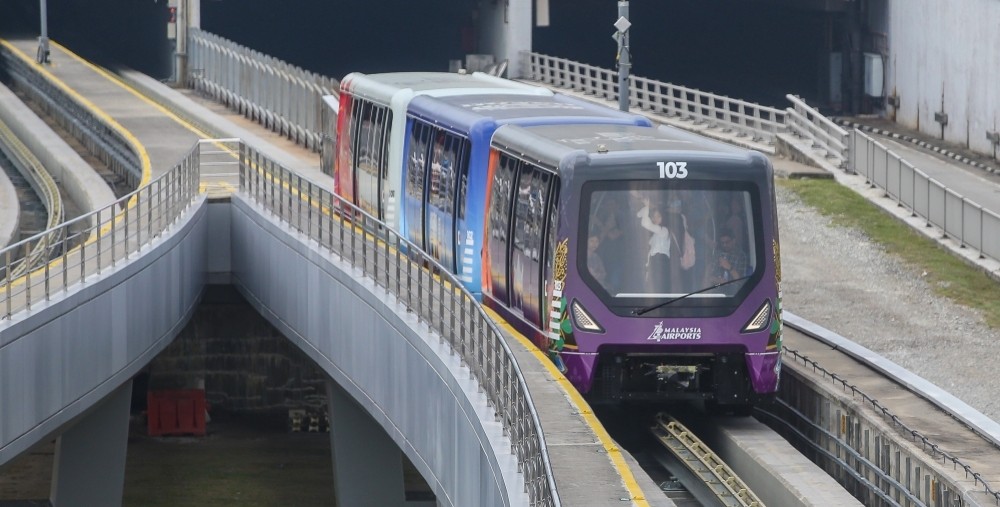
As Malaysia positions itself for Visit Malaysia 2026, ongoing disruptions to KLIA’s Aerotrain system are drawing renewed scrutiny, raising uncomfortable questions about readiness, credibility, and the country’s ability to deliver a seamless first impression to international travellers.
Malaysia Airports has confirmed that the long-troubled Aerotrain system at Kuala Lumpur International Airport (KLIA) will begin trial operations this month, following months of public frustration and repeated service failures. While the announcement is framed as a step forward, the timing could hardly be worse. With Visit Malaysia 2026 fast approaching, the Aerotrain saga has become an increasingly visible source of embarrassment for the country’s main international gateway.
The Aerotrain, which connects the main terminal to the satellite building used by many international flights, was only relaunched earlier this year after a two-year suspension and a whopping RM456 million upgrade. Expectations were high. Instead, the system has recorded 19 service disruptions between July and September alone, leaving passengers stranded, delayed, or herded onto shuttle buses in scenes that quickly circulated online.
For an airport that serves as the country’s primary entry point for millions of visitors each year, the optics are damaging. Airports are not just transport hubs; they are the first physical interaction travellers have with a destination. When that experience involves confusion, breakdowns, and contingency buses, it undermines years of tourism branding and promotional spend in a matter of minutes.
Malaysia Airports has attributed the failures to integration issues between new rolling stock and ageing infrastructure, compounded by power trips and signalling faults. While such explanations may satisfy engineers, they mean almost nothing to the travelling public, and do little to reassure passengers who reasonably expect basic reliability from an airport people mover system in a regional aviation hub.
In response, the airport operator launched a month-long action plan on November 15, aimed at restoring confidence in the Aerotrain’s performance. According to Malaysia Airports, the first two stages of this plan – covering inspections, repairs, and simulation testing – have now been completed. The system has entered Stage 3, involving trial operations under real-world conditions through the end of December.
These trials are being conducted while the Aerotrain continues limited daytime operations. Nightly shutdowns from 9:00pm to 7:00am remain in place, with bus services ferrying passengers between terminals. While operationally necessary, this arrangement reinforces the perception of a system still not fit for full service, despite the scale of investment already committed.
To address public scepticism, Malaysia Airports has appointed two independent assessors to review the entire process, with final reports expected by mid-January 2026. Transparency is welcome, but the fact that such oversight is required at this late stage only highlights how far confidence has eroded.
AN EMBARRASSING SAGA
The broader concern is reputational. Even as Malaysia wraps up its 2025 chairmanship of the ASEAN Summit, another even more visible global branding opportunity is just around the corner. Visit Malaysia 2026 is positioned as a major tourism push, targeting long-haul and high-yield markets while showcasing Malaysia as modern, efficient, and welcoming. KLIA is central to that promise. It should come as no surprise that persistent transport failures at the airport send precisely the opposite message, especially when neighbouring hubs are investing heavily in reliability, automation, and passenger experience.
In that sense, regional comparisons are unavoidable. Travellers transiting through Singapore, Bangkok, or even Jakarta are accustomed to dependable airport people movers that operate seamlessly throughout the day. When KLIA repeatedly falls short, it reflects not only on the airport operator, but on national preparedness more broadly.
There is also the issue of narrative control. Each new disruption, shutdown notice, or trial extension risks reigniting public criticism just as tourism authorities ramp up promotional efforts. Social media ensures that these stories travel much faster and wider than any official reassurance possibly could, shaping perceptions long before visitors arrive.
None of this is to suggest that the challenges are insurmountable. Complex transport systems do fail, and remediation takes time. But with Visit Malaysia 2026 looming, time is precisely what Malaysia Airports does not have. What is needed now is not cautious optimism, but demonstrable, sustained reliability – measured in months of incident-free operation, not press statements.
For Malaysia, the stakes are higher than a single airport system. KLIA is a national symbol, and its performance reflects directly on the country’s ambitions as a regional tourism and aviation hub. Every Aerotrain breakdown chips away at that image, turning what should be a moment of confidence-building into a recurring point of embarrassment.