


Stay up to date with the latest in the travel and hospitality industry, from airline launches and route expansions to new trends and transportation developments shaping the way we explore the world.
This is the December 2025 edition of Airline and Travel News.
MALAYSIA AVIATION GROUP CONFIRMS LEADERSHIP TRANSITION FOR 2026

Malaysia Aviation Group will enter 2026 with a significant leadership change as Datuk Captain Izham Ismail retires on January 31, concluding a distinguished career spanning more than four decades. His successor, Captain Nasaruddin A. Bakar – better known across the organisation as Captain Nasa – will assume the newly defined role of President and Group Chief Executive Officer.
Captain Izham’s departure marks a notable milestone for the flag carrier. He joined Malaysia Airlines as a pilot in 1979 and rose through the ranks to become Group Managing Director in 2017, ultimately becoming the airline’s longest-serving chief executive. His tenure coincided with some of the group’s most challenging years, during which MAG undertook multiple rounds of restructuring to stabilise its finances, rebuild resilience, and streamline operations. Those measures, though complex, placed the company on firmer footing at a time of global disruptions, shifting travel patterns, and tight cost pressures.
Today, Malaysia Aviation Group oversees a broad ecosystem that extends well beyond the core airline. Its portfolio includes Malaysia Airlines, Firefly, MASwings, AMAL by Malaysia Airlines, the Enrich loyalty programme, MHholidays, and an expanding mix of engineering, cargo, and ground-handling businesses. The structure reflects MAG’s long-term strategy to diversify revenue, broaden service propositions, and enhance integration across its operating units.
Industry analysts note that Captain Izham’s retirement comes at a turning point for the group. Stronger yields and more deliberate capacity planning have supported a gradual, disciplined recovery. With MAG signalling interest in a leaner and more sustainable operating model, the leadership transition is viewed as both timely and strategic.
Captain Nasa brings more than 30 years of operational and managerial experience to the role. A home-grown leader, he has been involved in several of MAG’s recent transformation initiatives, including the successful turnaround of MASwings in 2022 and the implementation of profit-led structures under the Long-Term Business Plan 2.0. His most recent position as Chief Operating Officer placed him at the centre of network decisions, fleet utilisation strategies, and daily operational robustness.
As the incoming President and Group CEO, he will guide the next chapter of MAG’s evolution under Long-Term Business Plan 3.0. Key priorities include improving operational reliability, elevating customer experience, and driving growth across the group’s three profit centres: Airline Business, Loyalty and Travel Services, and Aviation Services. Internally, the appointment is regarded as a natural progression that preserves continuity following years of restructuring.
For business travellers and frequent flyers, the leadership shift reinforces MAG’s ongoing focus on reliability, digitalisation, and service enhancements. With fleet renewals and product improvements still in motion, 2026 will be a revealing year for how the new leadership team intends to advance the group’s long-term ambitions.
To learn more, visit malaysiaairlines.com.
BATIK AIR MARKS A DECADE OF KUALA LUMPUR–PERTH CONNECTIVITY
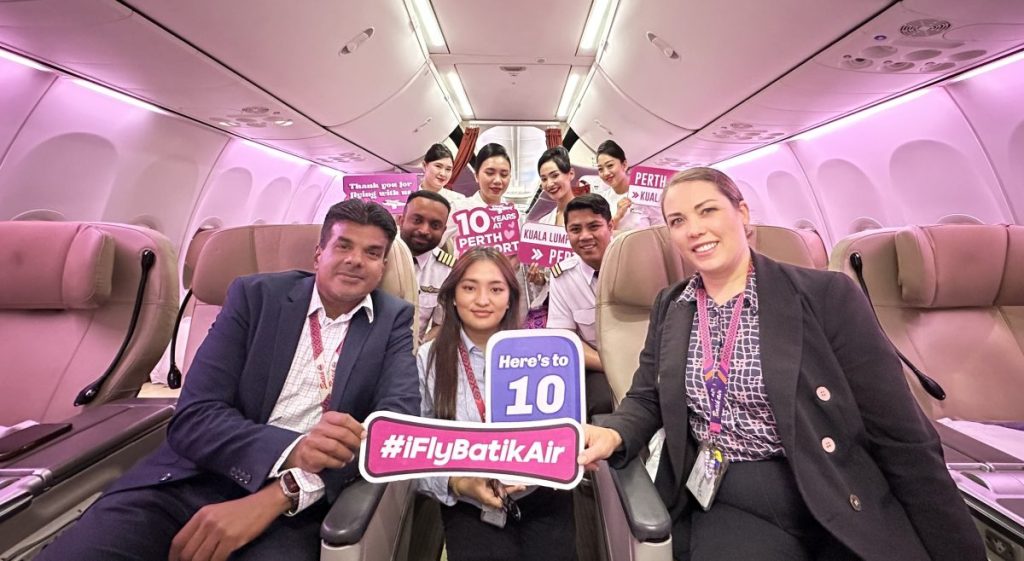
Batik Air celebrates 10 years of direct flights between Kuala Lumpur and Perth, highlighting a decade of reliable service that has strengthened ties between Malaysia and Western Australia. Since launching the route in 2015, it has grown into one of Batik Air’s most established international connections, serving leisure travellers, students, and business communities alike.
To mark the milestone, Perth Airport is hosting special festivities for passengers, including commemorative displays, exclusive giveaways, and surprise activities. James Gorton, Acting Chief Commercial & Aviation Officer at Perth Airport, noted that the partnership has contributed to Malaysia becoming Western Australia’s fifth-largest international visitor market, injecting $131 million in visitor expenditure in FY25.
“Over the past decade, Perth Airport and Batik Air have maintained a strong partnership,” Gorton said. “We congratulate Batik Air on this significant milestone and look forward to future decades of convenient travel for customers.”
Batik Air CEO Datuk Chandran Rama Muthy reflected on the route’s impact, emphasising the role of air connectivity in creating opportunities and deepening regional ties. “This milestone marks both a proud achievement and the start of a new chapter. Our focus is on developing a smarter, more connected network that offers travellers greater choice, comfort, and consistency,” he said.
Currently, Batik Air operates seven weekly direct flights between Kuala Lumpur and Perth, alongside seven one-stop services via Denpasar, Bali, providing flexible options for different traveller needs. In response to rising demand and Perth’s growing appeal as a destination, the airline will add 11 direct flights in December 2025, reinforcing its commitment to supporting two-way travel, tourism, and regional connectivity.
For bookings and more information, passengers can download the Batik Air mobile app or visit batikair.com.
SINGAPORE INTRODUCES FIRST-OF-ITS-KIND SUSTAINABLE AVIATION FUEL LEVY
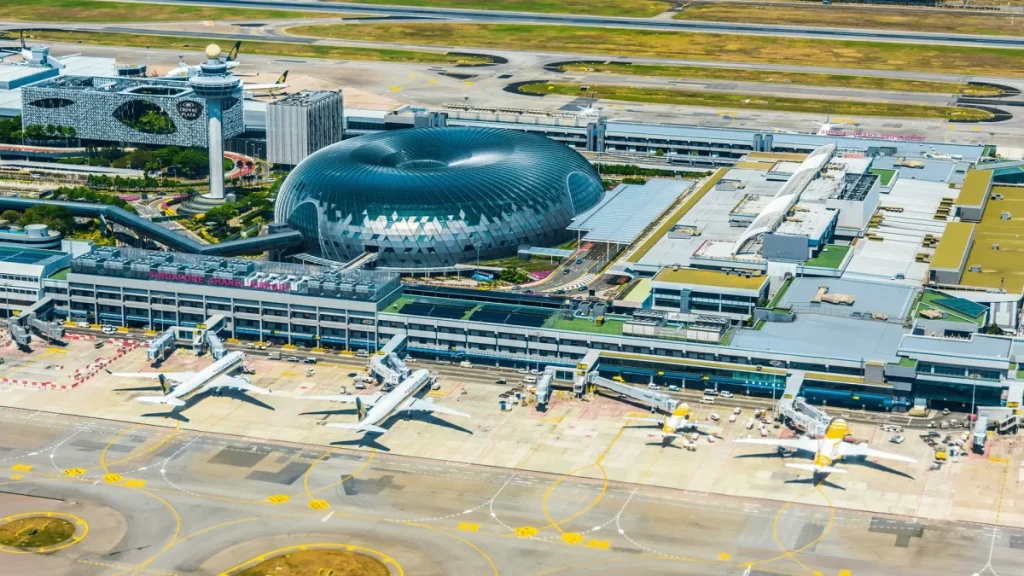
Singapore will become the first country in the world to introduce a broad-based Sustainable Aviation Fuel levy, setting a new benchmark for how governments may help fund the transition to cleaner flying. The charge will apply to tickets sold from April 1, 2026, for departures beginning October 1, and will affect anyone flying out of Changi Airport.
The levy supports Singapore’s plan to meet its initial 1% SAF target in 2026, with rates tied to both travel class and distance flown.
Four geographical bands determine the base rate for economy and premium economy passengers: S$1 for Southeast Asia; S$2.80 for most of Asia, Australia, and Papua New Guinea; S$6.40 for Europe, Africa, Central and West Asia, New Zealand, and the Pacific; and S$10.40 for the Americas. Premium economy travellers pay the same rate as economy, and transit passengers are exempt.
Business and first class come with a substantial premium. The Civil Aviation Authority of Singapore states that premium-cabin passengers will pay four times the economy rate. That means the highest band rises to S$41.60 for long-haul routes, reflecting an approach that aligns cost with the higher emissions footprint of spacious seating.
When first floated, a Singapore–London levy was estimated at S$16. The final amount is S$6.40, a meaningful reduction driven by more favourable SAF pricing. Private jets are included, with charges ranging from S$100 to S$1,040 depending on distance and aircraft category.
CAAS says all revenue will go towards purchasing SAF and supporting environmental measures. Director-General Han Kok Juan noted that the goal is to move the aviation ecosystem forward “in a measured way,” with time built in for airlines and travellers to adjust.
Singapore’s future targets are more ambitious — 3 to 5% SAF by 2030 — which leaves the door open for higher levies ahead.
Whether other countries follow remains uncertain. Policymakers recognize that anything increasing ticket prices is politically and economically sensitive. Still, Singapore’s model may pave the way for broader adoption, especially if costs remain modest for most travellers.
BERJAYA AIR SETS FEBRUARY 2026 TAKE-OFF WITH NEW REGIONAL ROUTES

Berjaya Air, a subsidiary of Berjaya Land Bhd, is preparing to re-enter the commercial aviation space with a broader regional focus, confirming that scheduled passenger services will commence on February 14, 2026. As reported by The Edge, the relaunch will see the airline introduce five new routes linking Malaysia to Thailand, Vietnam, and Indonesia, marking a shift beyond its traditional resort-centric operations.
The initial network will include flights to Koh Samui in Thailand, Phu Quoc in Vietnam, and three Indonesian cities – Medan, Pekanbaru, and Batam. The destinations are positioned to tap into short-haul leisure and secondary city demand, a segment where turboprop operations remain commercially viable and operationally flexible.
Speaking at a media briefing, Berjaya Land Group chief executive officer Syed Ali Shahul Hameed said the airline will continue to assess route performance as services ramp up, with the potential to expand its fleet if demand supports further growth. Historically focused on niche routes such as Redang, Berjaya Air is now aiming for a more diversified regional footprint.
Fleet renewal underpins this strategy. The airline placed orders for two ATR 72-600 aircraft in 2023, each valued at approximately US$28 million. The first aircraft is scheduled to arrive in January 2026 and will be displayed at the Singapore Airshow before entering service. The second aircraft is due for delivery in October 2026. Berjaya Air currently operates ATR 42-500 and ATR 72-500 aircraft.
To learn more, visit berjaya-air.com.
THE WORLD’S 50 BEST HOTELS 2025: ASIA LEADS THE WAY

Renowned for its independent rankings and journalistic rigor, the World’s 50 Best Hotels has released its 2025 list, highlighting outstanding accommodation around the globe. Now in its third year, the list draws on first-hand experiences from expert judges, focusing on the overall quality of stay rather than a single metric, giving travellers a credible guide to exceptional hospitality.
Rosewood Hong Kong claims the top spot in 2025, following near misses in previous years. Opened in 2019, the hotel spans over 400 rooms, blending Asian minimalism with modern sophistication. Its 11 restaurants and bars, multi-level wellness centre, and rooftop infinity pool with views of Victoria Harbour set a benchmark for luxury in Asia.
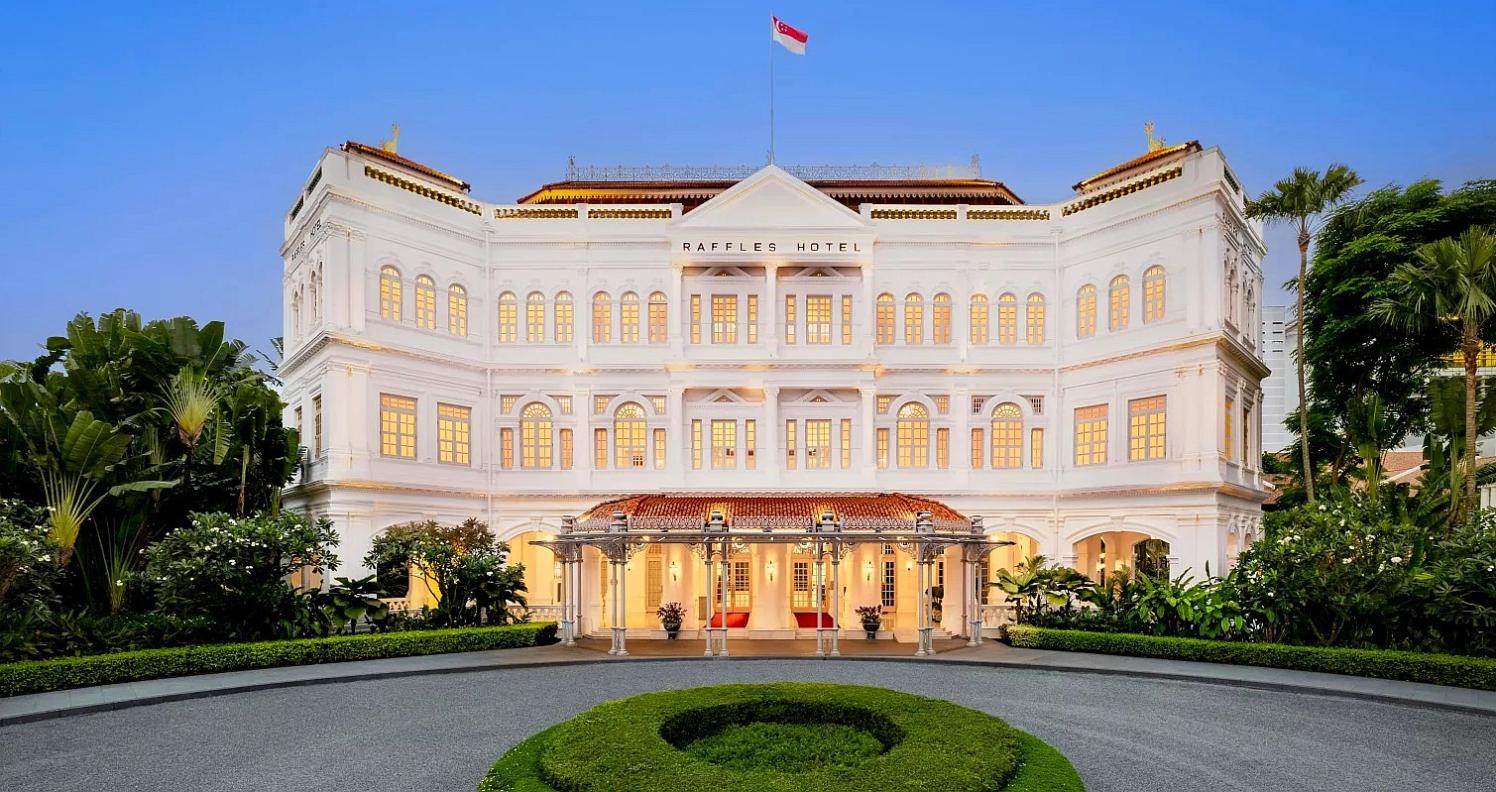
Asia takes pride of place with 20 hotels in the top 50. Thailand contributes four of the top five entries, including Four Seasons Bangkok at Chao Phraya River and Capella Bangkok, while Singapore’s Raffles ranks fifth. Tokyo and Kyoto provide five entries, and Bali and Beijing are represented as well, underlining the region’s dominance in luxury hospitality.
Europe follows close behind with 17 hotels in the top 50, combining historic charm with modern design. Lake Como’s Passalacqua leads European entries, while Florence’s Four Seasons and several London and Paris properties complete the top 10 European picks. The Americas, the Middle East, and the Indian Ocean round out the list with exceptional properties, from Dubai’s Atlantis The Royal to the Maldives’ Soneva Fushi.
Here’s the full list:
World’s 50 Best Hotels 2025
- Rosewood Hong Kong
- Four Seasons Bangkok at Chao Phraya River, Thailand
- Capella Bangkok, Thailand
- Passalacqua, Lake Como, Italy
- Raffles Singapore
- Atlantis The Royal, Dubai, UAE
- Mandarin Oriental Bangkok, Thailand
- Chable Yucatan, Chochola, Mexico
- Four Seasons Firenze, Florence, Italy
- Upper House Hong Kong
- Copacabana Palace, Rio de Janeiro, Brazil
- Capella Sydney, Australia
- Royal Mansour, Marrakech, Morocco
- Mandarin Oriental Qianmen, Beijing, China
- Bulgari Tokyo, Japan
- Claridge’s, London, UK
- Four Seasons Astir Palace, Athens, Greece
- Desa Potato Head, Bali, Indonesia
- Le Bristol, Paris, France
- Jumeirah Marsa Al Arab, Dubai, UAE
- Cheval Blanc Paris, France
- Bulgari Roma, Rome, Italy
- Hotel de Crillon, Paris, France
- Rosewood Sao Paulo, Brazil
- Aman Tokyo, Japan
- Hotel Il Pellicano, Porto Ercole, Italy
- Hotel du Convent, Nice, France
- Soneva Fushi, Maldives
- The Connaught, London, UK
- La Mamounia, Marrakech, Morocco
- Raffles London at The OWO, UK
- The Emory, London, UK
- Maroma, Riviera Maya, Mexico
- The Calile, Brisbane, Australia
- The Lana, Dubai, UAE
- Hotel de Paris Monte-Carlo, Monaco
- Janu Tokyo, Japan
- The Taj Mahal Palace, Mumbai, India
- One&Only Mandarina, Riviera Maya, Mexico
- Singita – Kruger National Park, South Africa
- Mandarin Oriental Hong Kong
- Hotel Bel-Air, Los Angeles, US
- The Mark, New York, US
- Las Ventanas al Paraiso, Los Cabos, Mexico
- The Tokyo Edition Toranomon, Japan
- Hotel The Mitsui, Kyoto, Japan
- Estelle Manor, Witney, UK
- Grand Park Hotel Rovinj, Croatia
- Hotel Sacher Vienna, Austria
- Mandapa, Bali, Indonesia
To learn more, visit theworlds50best.com/discovery.
FLY DIRECT FROM KUALA LUMPUR TO PATTAYA – SKIP THE OVERLAND JOURNEY
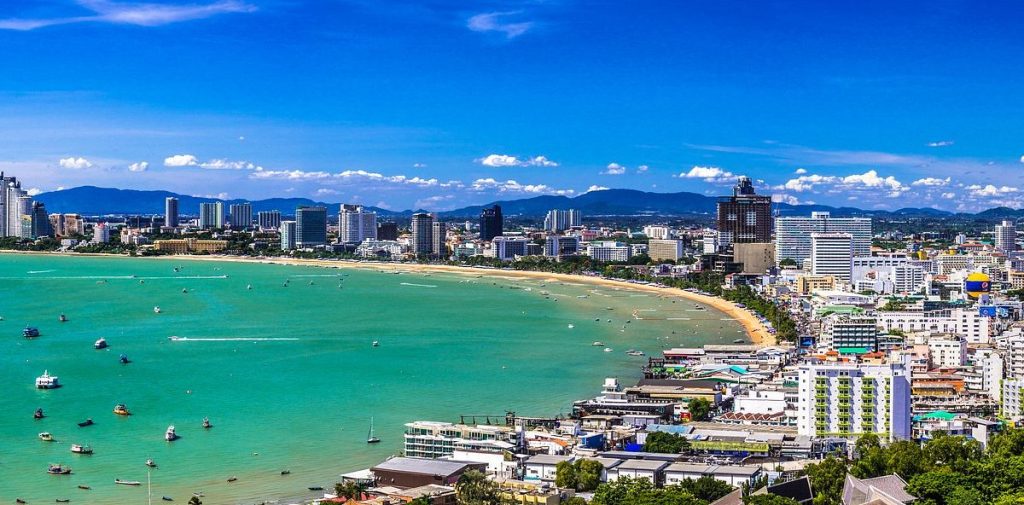
Travellers from Kuala Lumpur no longer need to fly to Bangkok and make the two-hour journey overland to Pattaya. AirAsia offers direct flights from KL to Pattaya, making this popular Thai seaside city more accessible than ever.
Pattaya, Thailand’s eighth-largest city, has long been a favourite for its mix of sun-soaked beaches, vibrant nightlife, and unique attractions such as Koh Larn and the Pattaya Floating Market. In 2019 alone, AirAsia carried more than 60,000 passengers between Kuala Lumpur and Pattaya, reflecting strong demand for this direct connection, which was discontinued during the pandemic years, and restarted last year.
The route provides the only direct flight link from KL to Pattaya, bypassing the need for transfers in Bangkok. “Direct connectivity to Pattaya opens up the East Coast of the Gulf of Thailand to travellers who want a quicker, more convenient journey,” said Bo Lingam, Group CEO of AirAsia Aviation Group. “With millions of Malaysians flying to Thailand every year, having a direct option to Pattaya makes travel simpler and enhances the overall experience.”
This connection also ties into AirAsia’s campaign for Thailand, which aims to showcase the country’s diverse destinations to visitors from Malaysia, Singapore, Indonesia, and beyond. Whether it’s a short beach break, a family holiday, or a lively getaway with friends, the direct flight to Pattaya saves time, stress, and planning, letting travellers get straight to the city’s highlights.
With the route having resumed in 2024, passengers can book direct flights to Pattaya and enjoy all the city has to offer without the overland transfer.
For schedules, fares, and bookings, visit AirAsia’s official website or mobile app.
BATIK AIR EXPANDS SUBANG NETWORK WITH NEW REGIONAL ROUTES
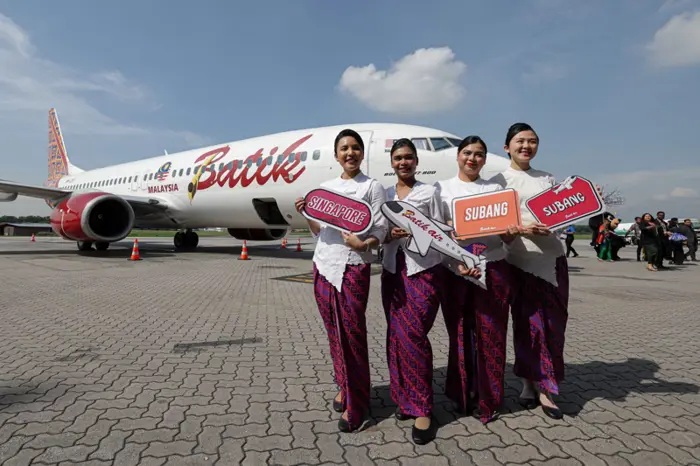
Batik Air has expanded its footprint at Sultan Abdul Aziz Shah Airport, Subang, launching a series of new routes that reinforce the airport’s role as a convenient city gateway for travellers in the Klang Valley.
Four of the airline’s newly introduced services operate from Subang, beginning with direct flights to Singapore and Jakarta, followed by Johor Baru and Langkawi, which come on stream this month. The additions provide travellers with more choice and an alternative to Kuala Lumpur International Airport, particularly for short-haul business and leisure journeys.
Batik Air chief executive officer Datuk Chandran Rama Muthy said the expansion aligns with Subang Airport’s ongoing transformation. With its central location and continued infrastructure upgrades, Subang is steadily repositioning itself as a practical hub for point-to-point regional travel.
Flights to Singapore and Jakarta commenced on December 8, with Johor Baru following on December 11 and Langkawi launching on December 12. The milestone was marked with a ceremonial water salute for Batik Air’s inaugural Singapore flight at Subang.
The new routes also support the government’s Subang Airport Regeneration Plan, which aims to revitalise the airport as a catalyst for tourism growth and economic activity. Chandran noted that the expanded network is timely as Malaysia prepares for Visit Malaysia Year 2026, helping to open the country to more regional visitors while improving domestic connectivity.
Tourism Selangor chief executive officer Chua Yee Ling welcomed the development, describing the new services as well aligned with the state’s Visit Selangor Year 2025 ambitions. With 6.4 million tourist arrivals recorded so far this year, she said the additional routes, particularly direct links to Indonesia, would help drive further growth, including in medical tourism and the cruise sector in Klang.
Batik Air currently operates Subang services to Penang, Kota Bharu, Kota Kinabalu, Kuching, and Bangkok, with the latest additions further strengthening its regional network.
For details and bookings, passengers can download the Batik Air mobile app or visit batikair.com.